
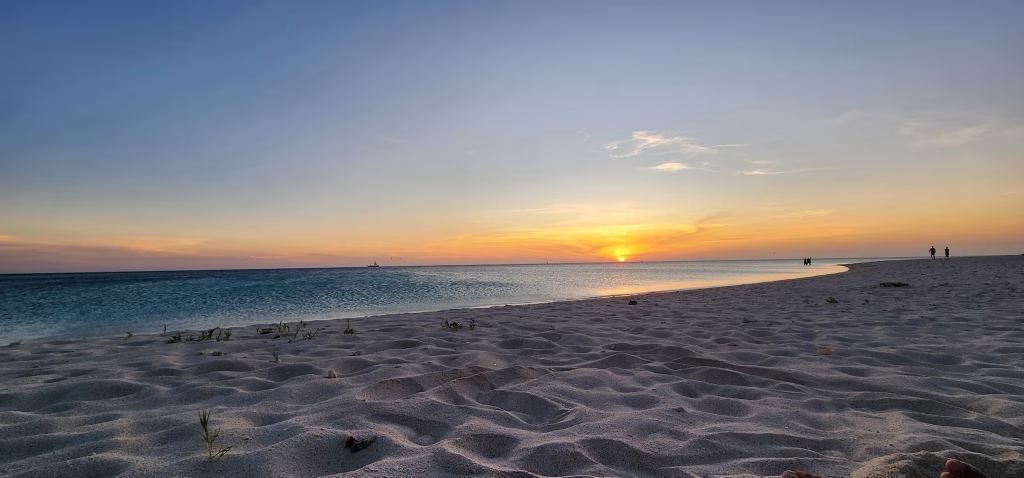
Short answer: no, Aruba isn’t overrated. The beaches really are that good, the weather really is that reliable, and the island is still one of the safest and easiest trips in the Caribbean. But Aruba is crowded in a way it wasn’t ten years ago. The pressure is real, people who live here feel it, and in October 2026 even the hotel industry said out loud that the island doesn’t need more tourists. If you know that before you come, you’ll have a better trip.
“Is Aruba overrated?” is one of the most common questions people type into Google before booking. Usually the worry behind it is simple: is it worth the money, and is it too touristy? We live here, so we’ll give you the honest version, with real numbers and the debate the island is having right now.
The Numbers: How Busy Is Aruba, Really?
Aruba is a small island, about 30 km (20 miles) long, with roughly 125,000 residents. In 2025 it received:
- Over 1.5 million stay-over visitors (people who fly in and spend at least one night)
- 970,803 cruise passengers
That’s nearly 2.5 million visits in one year, or about 20 visits for every person who lives here. And 2026 is running ahead of that: in the first six months of the year Aruba received 845,501 stay-over visitors and 551,168 cruise passengers, nearly 1.4 million in total, and hotel and rental nights rose 11.2%, according to figures compiled by Caribbean Network.
On an average day, Aruba’s Central Bureau of Statistics estimates about 31,000 tourists are on the island. That works out to roughly one in every five people you pass being a visitor. Along the Palm Beach strip in high season, it feels like a lot more.
Aruba is also one of the most tourism-dependent economies in the world. Tourism’s direct contribution was about 24% of GDP in 2023 by the official statistics bureau’s measure, and hotels and restaurants employ more than one in five workers. The real share is higher once you count everything that depends on visitors indirectly. When the pandemic closed the borders in 2020, the economy nearly stopped.
Why People Who Live Here Are Worried
This isn’t a few grumpy locals. In the past month alone, the island’s biggest business voices have said it in public.
The hotel industry says “enough.” On 9 October 2026, the Aruba Hotel and Tourism Association (AHATA) said tourism volumes have become too high, with pressure on beaches, nature, roads and traffic, and that arrivals have grown much faster than investment. Its position, as reported by 24ora: Aruba does not need more tourists, it needs visitors who spend more and respect the environment and culture. When hotels ask for fewer guests, it’s worth paying attention.
The Chamber of Commerce lists the problems plainly. In its response to the government’s new tourism plan, the Aruba Chamber of Commerce named crowded beaches, scarce parking, unclear rules for UTVs, strain on roads, wastewater treatment and water and power production, slipping service levels, gridlock in downtown Oranjestad when several cruise ships arrive at once, and pressure on the reefs.
Housing is where it hurts most. The Chamber counts about 4,100 active Airbnb-style units, roughly 11% of all homes on the island, with a quarter of them in Noord, the district right behind the hotel strip. A 2023 study found vacation rentals already offered more rooms than the hotel sector. Meanwhile the median home now costs about 11 times a median family’s annual income. More than 1,850 new hotel rooms are in the pipeline, which also need staff, and those staff need somewhere to live.
Residents are cooling on tourism, slowly. The Aruba Tourism Authority’s own local sentiment surveys still find most residents satisfied with tourism, but that share is shrinking. The concerns people raise are infrastructure, housing costs, weak nature protection, protecting Aruban culture, and a sense that the benefits of tourism don’t reach them personally.
Where the Money Actually Goes
This is the part most “is it worth it” articles skip. Tourists spent over Afl 5.55 billion (about US$3.1 billion) in 2025, up 6.5%. But average spending per visitor per day barely moved, from about Afl 532 to Afl 539. In other words, revenue grew mainly because more people came, not because each visit was worth more to the island. The Chamber of Commerce calculated that between 2019 and 2025, each 1% rise in visitors produced only about a 1.16% rise in real tourism revenue, below the government’s own target.
A large part of that spending also leaves Aruba again. Almost everything here is imported: in 2023 the island imported more than Afl 2.76 billion in goods (excluding oil), including over Afl 680 million in food. Profits from internationally owned hotels and chains flow abroad. Economists call this leakage, and it’s why a tourism boom doesn’t automatically make life on the island better.
Aruba Has Tried to Say “No More Hotels” Before
None of this is new. Aruba first discussed a moratorium on new hotel rooms in 1977. A construction freeze was in effect from June 1988. The moratorium was only anchored in law in 2018, and even then with exceptions for San Nicolas and specific Oranjestad projects, as Caribbean Network’s history of the moratorium shows. The pattern is decades of “no more hotels” followed by more hotels, and more recently, a wave of vacation rentals that no moratorium was designed to cover.
What’s Changing: The New Plan and the Fees on the Way
The government is now finalizing the Aruba Strategic Tourism Implementation Plan 2026–2031. Tourism Minister Wendrick Cicilia has said that increasing visitor numbers “can no longer be the primary goal”. The stated direction is “from volume to value”: higher spending per visitor (a target of about US$340 a day by 2031, up from roughly US$300 today) and more of that money staying on the island.
For travelers, the part that matters is the money. The August 2026 draft of the plan proposes, as reported by Aruba.nu:
- A US$25 Sustainable Tourism and Resilience Fee per stay-over visitor, for a crisis fund
- An extra US$10 Tourism Product Fee, for nature conservation
- A US$25 marine conservation fee for recreational divers
- An extra US$5 per cruise passenger
- A 1 percentage point increase in room tax, plus a new rental car levy and a higher environmental levy
Important: these are proposals, not law. The draft says the first new levies would start in 2027 at the earliest, and they still need legislation. The Chamber of Commerce worked out that the two fixed fees alone would add US$140 for a family of four. For now, the fee that actually applies is the existing US$20 Sustainability Fee, paid through the official ED Card for most air arrivals since July 2024. It funds wastewater treatment. Our ED Card guide covers who pays and who is exempt.
There’s a fair criticism of the plan, too. As an Antilliaans Dagblad analysis points out, higher spending per visitor doesn’t by itself take pressure off the roads, the housing market or the reefs, and the plan still allows growth as long as revenue grows faster. Whether it works will depend on enforcement, not on the document.
So, Is Aruba Overrated?
Here’s our honest take, as people who live here.
What isn’t overrated: Eagle Beach is still one of the best beaches in the world. The trade winds keep the heat bearable all year, and Aruba sits outside the main hurricane belt. It’s safe, English is spoken everywhere, US dollars work everywhere, and getting around is simple. Very few Caribbean islands are this easy.
What can disappoint: If you picture an empty, undiscovered island, Palm Beach in February will surprise you. Expect high-rise resorts, busy beach-chair rows, traffic on L.G. Smith Boulevard, a packed downtown on three-ship days, and prices that reflect an island that imports nearly everything. Add room taxes, service charges and resort fees to a quoted room rate, and the bill can be noticeably higher than the headline price.
The verdict: Aruba isn’t overrated. It’s popular, and popularity has costs that land on the island. The trip you have depends a lot on when you come, where you stay and how you spend your days.
How to Visit Aruba Without Adding to the Problem
The good news is that the choices that make a trip better for the island usually make it better for you too.
- Come outside peak season. Late April to August and the autumn months are quieter, cheaper, and have the same reliable weather. Our month-by-month weather guide shows what each month is really like.
- Think about where you stay. Our Palm Beach vs Eagle Beach comparison explains the difference in density. If you book a vacation rental, choose a properly licensed, locally owned one, not one of the dozens of units in a converted residential street.
- Eat local. Every dinner at an Aruban-owned restaurant keeps more money on the island than another meal at a chain. Start with our list of authentic local Crioyo restaurants, and shop for fruit and vegetables at local produce stands.
- Skip the UTV convoys. Off-road vehicles in long convoys damage dunes, the north coast and Arikok, and residents complain about the noise and dust. The government has already capped convoy sizes. If you want to see the wild side of the island, hike it or go with a licensed guide who stays on marked routes.
- Use reef-safe habits. Don’t stand on coral, don’t feed fish, and pick snorkel operators that limit group sizes. The reefs around the Antilla wreck and Boca Catalina get a lot of visitors.
- Avoid downtown on multi-ship days. If you’re on land when several ships are in, do the beach in the morning and town in the late afternoon. Cruise passengers can find timing tips in our cruise port guide.
- Spread out. San Nicolas, Savaneta and the quieter beaches see a fraction of the crowds, and the local businesses there benefit far more from your visit.
- Pay fees only on official sites. The ED Card and Sustainability Fee are handled through the government platform. Third-party sites charging extra to “process” them add nothing.
- Tip and be patient. Many people serving you commute from neighborhoods where rents have risen sharply. A good tip and some patience on busy days go a long way.
Frequently Asked Questions
Is Aruba too crowded? In peak season, the main hotel areas are busy. On an average day, about one in five people on the island is a visitor. Quieter months, quieter beaches and the south of the island are noticeably calmer.
Is Aruba worth the money? For reliable weather, top beaches, safety and ease, most visitors think so. It isn’t a budget destination, though. Our complete cost breakdown puts real numbers on a trip.
Is Aruba adding new tourist fees? A draft government plan proposes several new fees, including a US$25 resilience fee and a US$10 tourism product fee per visitor, starting no earlier than 2027. None are law yet. Today, the US$20 Sustainability Fee applies to most air arrivals.
Is Aruba still building new hotels? Yes. More than 1,850 new hotel rooms are in the pipeline, despite a long-standing moratorium that allows exceptions.
When is the least crowded time to visit Aruba? Generally late April through August and the autumn months outside holidays. Christmas, New Year, February and March are the busiest.
The Bottom Line
Aruba earned its reputation honestly. The problem isn’t that the island is overrated. It’s that it’s loved by more people than a small island can comfortably hold, and the people who live here are now saying so openly. Come, enjoy it, and spend your money where it stays on the island. If you want a plan that does exactly that, our 5-day itinerary covers the whole island, not just the strip.
Share this content: