
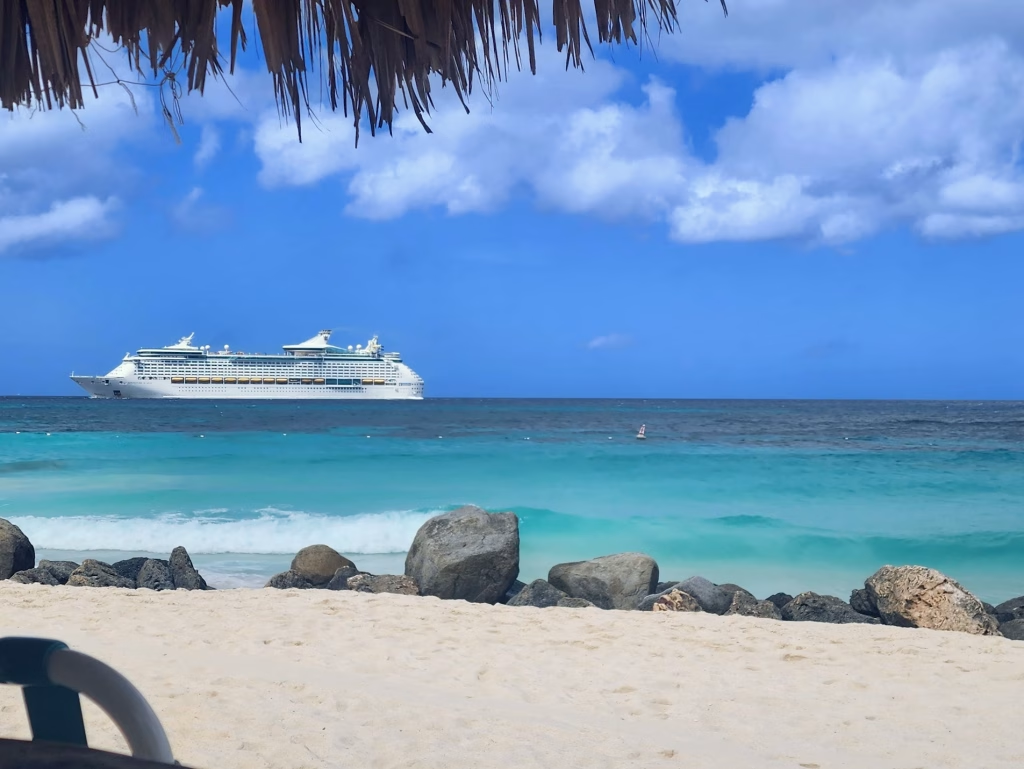
Short answer: Aruba is one of the easiest cruise ports in the Caribbean to do independently. The terminal is in the middle of Oranjestad, downtown is a five-minute walk, and Aruba’s two best beaches are a 10–20 minute taxi ride away. With eight hours in port you can comfortably do a beach, a meal and the town — and you’ll spend a fraction of what the ship charges for a shore excursion.
Aruba’s port is unusually well-positioned. You step off the ship into the capital, not into a fenced shopping compound half an hour from anything. That changes what’s realistic in a single day.
Below are five ready-made plans depending on what you actually want from your day, plus the practical details — taxi rates, timings, currency and the mistakes that get people back to the gangway sweating.
First, the Practical Stuff
Where you dock. Cruise ships berth at the terminal on the northern edge of downtown Oranjestad. From the gangway, the main shopping street and the historic centre are a five-to-ten minute walk — genuinely walkable, no shuttle needed.
Do you need an ED Card? Probably not — and this is worth getting right. Aruba’s online Embarkation–Disembarkation card is mandatory for air arrivals, and a lot of travel sites wrongly extend that to cruise passengers. According to Aruba Wastewater Sustainable Solutions, which administers the associated Sustainability Fee, cruise ship passengers usually do not need to complete an ED Card. The requirement applies only to passengers on vessels that are required to clear Aruba Immigration on arrival.
The deciding factor is the vessel, not whether you personally step ashore — so you can’t work it out from your itinerary. Ask your cruise line to confirm whether your ship’s passengers must clear immigration. And ignore the third-party websites offering to “process” an Aruba ED Card for $30–$74; even air travellers don’t need them, since the government form is free. Full details in our complete ED Card guide.
Money. US dollars are accepted absolutely everywhere at a fixed rate. You do not need to exchange anything. Bring small bills for taxis, tips and beach chairs. Cards work in most restaurants and shops.
Language. English is spoken universally in the tourism sector. Papiamento is the local language, Dutch is official, and Spanish is widely spoken.
Taxis. Government-fixed rates, no meters. There is no Uber or Lyft in Aruba.
Fares changed substantially in May 2026 — Aruba published its first new official pricelist since 2018, raising most routes by 30–80%. The minimum fare for any ride is now $10.00 (Afl 18.00), and the base fare covers up to four passengers (it previously covered five). Each passenger beyond four adds $3.00, up to a maximum of seven. Expect roughly $18–$30 from the terminal to the Eagle Beach and Palm Beach hotel areas, more for Arashi, and substantially more for the far south.
Check your exact route at taxi.aw before you go ashore. Since a Ministerial Decree of 18 May 2026 this is the government’s official fare platform, and every licensed taxi must display a QR code inside the vehicle linking to it — scan it if there’s any doubt. Be aware that most travel sites still publish the old fares, so figures you find elsewhere may be well below what you’ll actually be asked for. A $5.00 surcharge applies on Sundays, public holidays, between 11 PM and 7 AM, and from 24 December to 1 January.
Rates are per vehicle rather than per person, so groups of three or four should always take a taxi rather than the bus. If you believe you’ve been overcharged, note the TX plate number and report it to the Department of Public Transportation via taxi.aw, on +297 594 8660 or +297 564 4050, or at complaints@dtp.gov.aw.
Buses. Arubus runs from a terminal near the cruise port up the hotel strip to Palm Beach for a couple of dollars each way. Slower than a taxi but very cheap for solo travellers. Details in our Complete Guide to Transportation in Aruba.
The free streetcar. A genuinely free tram loops through downtown between the terminal area and the main shopping street. Not fast, but pleasant and useful in the heat.
All-aboard. Whatever your ship’s stated all-aboard time is, be back 45 minutes earlier than you think you need to be. Taxis get scarce in the late afternoon when three ships are in port at once. Ships do not wait for independent travellers.
Plan A — The Beach Day (Easiest, and What Most People Should Do)
If you only do one thing in Aruba, do this. The beaches here are the reason the island is famous, and they’re 15 minutes from your ship.
9:00am — Off the ship, straight to the taxi rank. Ask for Eagle Beach (wider, quieter, more space) or Palm Beach (more amenities, more restaurants, more activity). Our full comparison of Palm Beach vs Eagle Beach explains the difference properly, but for a day trip: Eagle Beach if you want space, Palm Beach if you want a beach bar and a lunch menu.
9:20am–1:00pm — Beach. Chair and umbrella rentals run roughly $20–$40 for a set. All Aruban beaches are public by law, so you can lay a towel anywhere without paying a resort a cent.
1:00pm — Lunch at a beachfront restaurant, or walk back to one of the plazas behind Palm Beach.
2:30pm — Taxi back to Oranjestad.
3:00pm–4:30pm — Downtown: duty-free shopping, the colonial architecture on Wilhelminastraat, a cold drink.
Cost: roughly $75–$130 per person including taxis, chairs and lunch under the 2026 taxi fares. A comparable ship excursion typically runs $90–$150.
Plan B — The Snorkel and Wreck Day
Aruba’s headline underwater attraction is the Antilla, a 400-foot German freighter scuttled in 1940 and sitting in shallow water off Malmok. It’s shallow enough that snorkellers see a great deal of it from the surface, which is rare for a wreck this size.
9:00am — Catamaran snorkel trips depart from the Oranjestad and Palm Beach areas, typically running three to four hours and visiting the Antilla plus Boca Catalina and Malmok Reef. Gear, drinks and often lunch are included.
Book this one in advance. Morning departures fill up, and the water is calmer before noon. If your ship offers this as an excursion at a similar price, the ship version has one real advantage: they’ll wait for you. Independent operators won’t.
1:30pm — Back ashore, lunch downtown.
3:00pm — Optional: the Atlantis submarine tour departs from Oranjestad and descends to reef and wreck sites — good for non-swimmers and worth considering if the sea is rough.
Cost: $55–$95 per person for the catamaran trip.
Plan C — Oranjestad on Foot (No Taxi Required)
If mobility, budget or a short port call rules out a beach run, Oranjestad genuinely fills a day — and this plan costs almost nothing.
Walk the historic centre. Wilhelminastraat and the surrounding blocks hold the best of Aruba’s Dutch colonial architecture, painted in the improbable colours the island is known for.
Fort Zoutman and the Historical Museum. Aruba’s oldest building, dating to the late 18th century, with the Willem III Tower attached.
The National Archaeological Museum. Small, well done, and the best single explanation of the island’s pre-colonial history you’ll find anywhere on Aruba. Modest admission.
Caya Betico Croes (Main Street). Duty-free shopping, local shops, and the free streetcar running its length.
Renaissance Mall and Royal Plaza. Air-conditioned relief, plus most of the high-end duty-free.
The waterfront promenade. A landscaped linear park along the water, good for a slow walk with the ship in view.
Eat like you’re not on a ship. Skip the tourist-strip menus and find something Aruban — our guide to authentic local Crioyo restaurants has options, and Aruban bakeries are worth a detour on their own if you have a sweet tooth (our dessert guide covers those).
Cost: under $50 per person including lunch and a museum.
Plan D — The Big Island Loop (Ambitious but Doable)
Only attempt this with a long port call of nine hours or more, and preferably by hiring a taxi driver for a fixed half-day rate rather than piecing it together.
A private driver for four hours typically runs $180–$220 for the vehicle, which for four people is very reasonable and gets you:
- California Lighthouse at the northern tip
- Alto Vista Chapel
- Bushiribana Gold Mill Ruins on the wild north coast
- Casibari Rock Formations
- A stop at Arashi or Palm Beach
What to skip on a cruise day: Arikok National Park and Baby Beach. Both are excellent and both are too far south to do safely against an all-aboard deadline. Save them for a proper stay — we’ve mapped that out in our 5-day Aruba itinerary.
Plan E — The Flamingo Question
Let’s address this directly, because it’s the single most-searched Aruba cruise question and the answer disappoints people.
The flamingos live on a private island owned by a downtown resort. Access is primarily for guests of that property. A limited number of day passes are sometimes released, they sell out well in advance, and availability is not guaranteed on any given date.
If you have your heart set on it: contact the resort directly, weeks ahead, and have a backup plan. Do not build your day around it and do not arrive expecting to buy a pass at the door.
The realistic alternative: several excursion operators run trips to a nearby private island with beaches, snorkelling and facilities, and some ships sell this as a shore excursion. It’s a good day out. It just isn’t the flamingo photo.
Which Beach Is Closest to the Aruba Cruise Port?
In order of distance from the terminal:
- Surfside Beach — the closest swimmable beach, roughly 10 minutes on foot or a very short taxi ride, near the airport. Convenient, not spectacular. Fine if you’re short on time.
- Eagle Beach — 10 minutes by taxi. Wide, white, uncrowded, world-ranked. The best value-for-effort choice for cruise passengers.
- Palm Beach — 15 minutes. Busier, more restaurants and watersports on hand.
- Arashi Beach — 20 minutes. Quieter, good shore snorkelling.
- Baby Beach — 40 minutes. Wonderful, but too far for a standard port day.
If you’re deciding right now on the gangway: Eagle Beach. It’s close and it’s the best beach of the group.
Mistakes That Ruin a Port Day in Aruba
- Assuming old taxi fares. Rates rose 30–80% in May 2026 and most travel sites still quote the old ones. Scan the QR code in the taxi or check taxi.aw.
- Underestimating the return queue. With multiple ships in port, taxis back to the terminal get scarce after 3pm.
- Bringing your passport ashore unnecessarily. Check your ship’s policy; many only require your cruise card and a photo ID. A passport lost on a beach is a very bad day.
- Skipping sunscreen because of the breeze. Aruba’s trade winds hide sunburn extremely effectively. This catches out more cruise passengers than anything else — see our weather and wind guide.
- Trying to reach Arikok or Baby Beach. Too far. You’ll spend the day watching the clock.
- Assuming everything is expensive. Aruba has a reputation for high prices, but a beach day here is one of the better-value port days in the Southern Caribbean. Our full cost breakdown puts real numbers on it.
Is It Safe to Explore Aruba Independently?
Yes. Aruba consistently ranks among the safest destinations in the Caribbean, and downtown Oranjestad, the hotel strip and the main beaches are comfortable to walk during the day. Standard precautions apply: don’t leave valuables unattended on the sand, and keep your cruise card and cash separate. We covered the topic in detail in Is Aruba Safe?
Frequently Asked Questions
Can you walk from the Aruba cruise port to town? Yes. Downtown Oranjestad is a five-to-ten minute walk from the terminal. A free streetcar also runs through the centre.
What is the closest good beach to the Aruba cruise port? Eagle Beach, roughly 10 minutes by taxi. Check taxi.aw for the current fare — rates rose across the board in May 2026 and the $10 minimum now applies to every ride. Surfside Beach is closer still but far less impressive.
Do cruise passengers need an Aruba ED Card? Usually not. Despite what many travel sites say, the ED Card requirement applies only to passengers on vessels required to clear Aruba Immigration — not to cruise passengers generally, and not simply because you go ashore. Ask your cruise line to confirm for your specific ship, and don’t pay a third-party site to process one.
Is Aruba expensive for a cruise day? Not especially. A full beach day with taxis, chairs and lunch runs roughly $75–$130 per person under the 2026 taxi fares — still typically at or below the equivalent ship excursion.
Can I do Aruba on my own or should I book a ship excursion? Aruba is one of the easiest Caribbean ports to do independently — the terminal is downtown, taxi rates are fixed, and English is universal. The main argument for booking through the ship is that the ship waits for its own excursions.
How much time do you get in Aruba on a cruise? Most calls run eight to ten hours, and some itineraries include an overnight. Check your specific sailing, and work backwards from all-aboard rather than from departure.
Is there Uber in Aruba? No. Taxis operate on government-fixed rates, and Arubus runs public buses up the hotel strip.
The Bottom Line
Aruba is a port where independent travel clearly beats the ship’s excursion desk. You dock in the capital, the taxi rates are published and cheap, everyone speaks English, and one of the best beaches in the world is fifteen minutes away.
Take a taxi to Eagle Beach in the morning, come back for lunch and a wander through Oranjestad in the afternoon, and be at the gangway earlier than you planned.
And if the island convinces you — most people it does — come back properly. Our 5-day itinerary covers everything a port day can’t reach.
Share this content: