
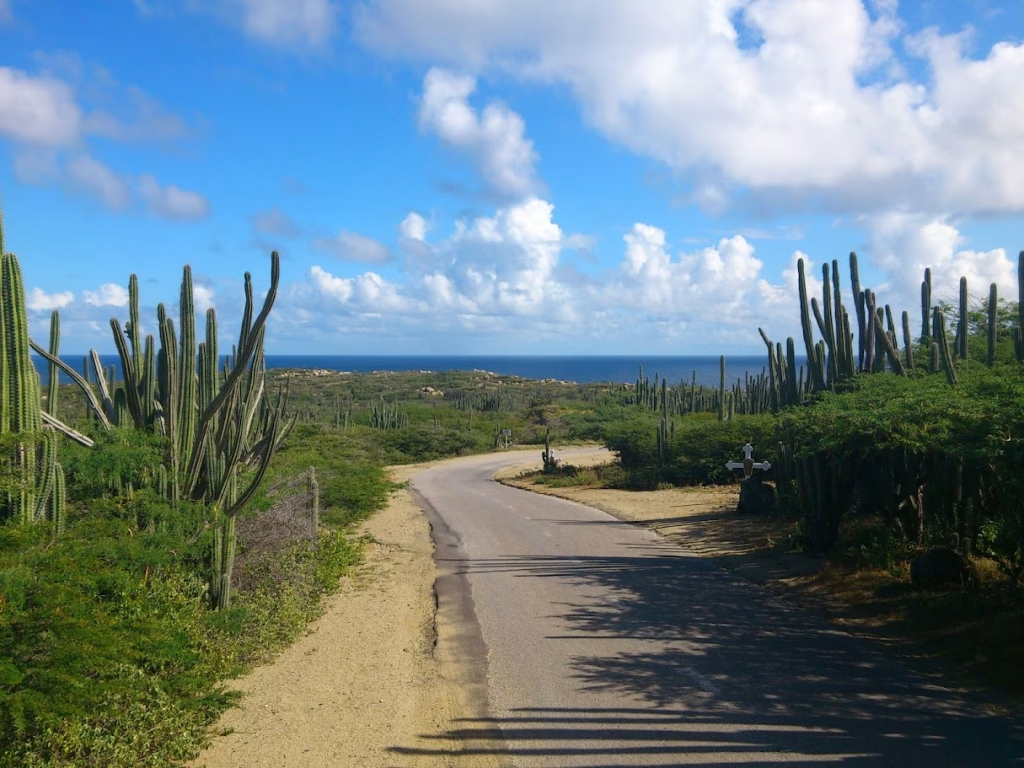
How Do You Get Around in Aruba?
Short answer: getting around Aruba means choosing between taxis, the Arubus public bus, and a rental car — and most visitors use all three. Taxis are fixed-price and best for airport transfers, the $2.60 bus covers the entire hotel strip, and a rental car for two or three days unlocks everything else. There is no Uber or Lyft in Aruba.
Here’s the quick version before the detail:
| If you want to… | Use | Cost |
|---|---|---|
| Get from the airport to your hotel | Taxi | $26–$41 depending on area |
| Move along the hotel strip and beaches | Arubus | $2.60 per ride, $10 day pass |
| Reach Arikok, Baby Beach or the north coast | Rental car | $45–$90 per day |
| Get home after 11:30pm | Taxi | Minimum $10, surcharges apply |
| Explore downtown Oranjestad | Free streetcar, or walk | Free |
Do you need a car in Aruba? Not for the whole trip. If you’re staying on Palm Beach or Eagle Beach and mostly want beaches and restaurants, buses and taxis cover you. Rent for two or three days when you want to see the rest of the island — that’s the approach that costs least and misses least.
Is there Uber in Aruba? No. Uber, Lyft and other rideshare apps do not operate here, and that hasn’t changed in 2026. Taxis run on government-fixed zone fares instead, so there’s no surge pricing and no negotiating — but also no app to summon a car. Save a taxi company number to your phone before you arrive.
How much does it cost to get around Aruba for a week? A couple combining buses, occasional taxis and a two-day car rental typically spends $250–$320 across seven days. An all-taxi week now runs well past $600 under the 2026 fares. Our Aruba Transportation Costs Calculator prices your specific combination.
The rest of this guide covers each option in detail.
Planning a trip to Aruba and wondering how to get around the island? Understanding your transportation options is essential for maximising your vacation while keeping costs under control. From the affordable public bus to fixed-rate taxis and the freedom of a rental car, Aruba offers several ways to reach its beaches and attractions. This guide covers everything you need to know about getting around the island in 2026 — including the island’s newly updated official taxi fares, practical tips, and why some popular tour options are a poor choice environmentally.
Important 2026 update: Aruba introduced a new official taxi pricelist on 20 May 2026, the first revision since 2018. Most fares rose significantly — the minimum fare went from $7.00 to $10.00, and an airport transfer to Palm Beach that cost $31 is now $41. A Ministerial Decree also designated taxi.aw as the government’s single official source for fares, and every licensed taxi must now display a QR code linking to it. All figures below reflect the new rates, but check taxi.aw for your exact route before you travel.
The biggest decision you’ll make is whether to rely on taxis and buses or rent a vehicle. Most visitors find that a combination works best: a taxi for the airport transfer, the bus for beach-hopping along the hotel strip, and a rental car for one or two days to reach remote areas like Arikok National Park. The bus costs $2.60 per ride against $37–$41 for an airport taxi, a meaningful saving for budget-conscious travellers — though taxis win outright when you have luggage or it’s late.
Aruba lacks rideshare services like Uber and Lyft due to taxi industry regulation, so knowing the local systems genuinely matters here in a way it doesn’t in most destinations. Before you travel, make sure you’ve also completed your Aruba ED Card — it’s mandatory for every air arrival and can only be submitted in the final days before departure. Now let’s go through each transport option.
Taxis in Aruba: What you need to know
Aruba operates exclusively on fixed taxi rates, not metered fares. All prices are regulated by the Department of Public Transportation, meaning every licensed driver should charge identical amounts for the same routes. This system eliminates price haggling but requires travelers to know standard rates beforehand to avoid overcharges.
The minimum taxi fare is $10.00 (Afl 18.00) as of 20 May 2026, up from $7.00 under the previous sheet. Rates are charged per vehicle for up to four passengers, not per person — note that the base fare previously covered five, so larger groups now pay more. A surcharge of $3.00 (Afl 5.40) applies for each additional passenger beyond four, and a driver may not carry more than seven passengers. So five passengers add $3, six add $6, seven add $9.
Current airport fares run approximately $26 to downtown Oranjestad, $37 to Eagle Beach low-rise hotels, and $41 to Palm Beach high-rise resorts. Short hops between hotel areas — low-rise to high-rise, for instance — now run around $18, which is the change that catches repeat visitors out most. Which area you’re staying in makes a real difference to your weekly transport spend; our comparison of Palm Beach vs Eagle Beach covers the trade-offs.
The official surcharges, all published at taxi.aw, are:
- Time surcharge: $5.00 (Afl 9) — applies on Sundays, on official public holidays, daily between 11:00 PM and 7:00 AM, and across the whole period from 24 December to 1 January. It may only be charged once per trip.
- Luggage: $3.00 (Afl 5.40) per extra piece — each passenger travelling to or from the airport, or between hotels, gets one piece of luggage plus one backpack or handbag free. Attaché cases, laptop bags, carry-ons and any mobility equipment cannot be charged for at all.
- Trunk use on other trips: $3.00 total, not per item — and it cannot be applied to luggage.
- Waiting time: $1.00 (Afl 1.80) per minute, if you keep the taxi waiting.
- Hourly hire: $60.00 (Afl 108) per hour, with a two-hour minimum.
Most travel sites, including many pages published this year, are still running the pre-May 2026 figures — check taxi.aw rather than trusting a number you found elsewhere.
Every licensed taxi is now legally required to display a QR code inside the vehicle linking to the official taxi.aw fare calculator. Scan it before you set off if there’s any doubt about the price. Drivers may not charge more than the government-approved fare. If you believe you’ve been overcharged, note the vehicle’s TX plate number and report it to the Department of Public Transportation via taxi.aw, on +297 594 8660 or +297 564 4050, or at complaints@dtp.gov.aw.
Finding and calling taxis in Aruba
Queen Beatrix International Airport offers the most reliable taxi access with a 24/7 official stand immediately outside the arrivals hall. Walk past anyone approaching inside the terminal and proceed directly to the designated taxi line where government-registered drivers display visible entry cards. Staff assist during busy periods to ensure smooth operations.
Beyond the airport, taxis congregate at the cruise ship terminal, major hotels in Palm Beach and Eagle Beach, and throughout downtown Oranjestad. Hotels and restaurants willingly call taxis for guests, often faster than street hailing. During high season, especially after 9 PM, wait times can stretch to 30-60 minutes, making pre-booking essential for late-night transportation.
Uber, Lyft, and all rideshare apps remain unavailable in Aruba in 2026 due to government regulations protecting the licensed taxi industry. Your only options are calling taxi companies directly, having your hotel arrange pickups, or hailing taxis on the street in tourist zones. Keep company contact numbers saved on your phone for convenience.
Reputable taxi companies and contact information
Aruba Taxi Company (+297 587-1300, info@arubataxicompany.com) receives the most frequent recommendations from travelers and tourism authorities. Located on Rondweg in Oranjestad, they handle airport transfers and island tours with professional service.
Taxi Address Service operates 24 hours at +297 587-5900 (taxi@setarnet.aw), making them ideal for late-night or early-morning pickups. Their location at L.G. Smith Blvd 234 in Oranjestad serves as a reliable dispatch hub.
Additional options include Taxi Services Aruba (+297 741-0504) and Arubas Transfer Tour & Taxi C.A. (+297 582-2116). If you experience problems with taxi service or suspect overcharging, contact the official complaint line at +297 594-8660 via phone or WhatsApp between 8 AM and 9 PM.
Understanding fixed rates versus metered taxis
Aruba’s taxis have no meters whatsoever. Fares are based on destination zones established by government rate cards that all licensed drivers must carry. This transparency theoretically prevents surprises, but travelers should still agree on the exact price before entering the vehicle and request to see the official rate sheet if any doubt exists.
Check your route on taxi.aw before you travel — since May 2026 this is the government’s official fare platform by Ministerial Decree, and it supersedes every older rate card circulating online. Bookmark it on your phone; the QR code in every licensed taxi points to the same place. Despite fixed pricing, occasional reports surface of drivers quoting incorrect “private pickup” fees or inflated rates to unfamiliar tourists. Legitimate taxis display “TX” on license plates and visible driver identification, and every vehicle must carry a QR code plus the text “Visit taxi.aw for the official taxi fares” somewhere clearly visible to passengers.
Cash remains the norm, with US dollars and Aruban Florins both accepted at the fixed rate of $1.00 = Afl 1.80. Card payment is available when booking through the island’s official transport platform, but bring small USD bills regardless — drivers frequently cannot break large denominations. Tipping isn’t mandatory but is appreciated at 10-15%, or simply round up the fare.
Public transport: The Arubus system
Arubus provides affordable public transportation throughout Aruba’s main tourist corridor for just $2.60 per ride. The government-operated system connects downtown Oranjestad with the hotel strip, major beaches, and San Nicolas using modern air-conditioned buses that run from approximately 5:45 AM to 11:30 PM daily.
The most important routes for tourists are Lines L10, L10A, and L10B, which serve the hotel strip from Oranjestad to Palm Beach, Eagle Beach, and Arashi Beach. Line L10A extends all the way to the northern tip near California Lighthouse, while L10B turns around at the Marriott in Palm Beach. These routes run every 15-20 minutes during peak hours (5:45 AM to 6 PM) and every 40 minutes during evening hours until 11:30 PM.
Routes L1, L2, and L3A connect Oranjestad with San Nicolas in the southeastern part of the island. Line L2 passes near the airport but isn’t practical for airport transfers since luggage beyond small carry-ons is prohibited on all Arubus routes. The L900 route to Baby Beach remains suspended as of 2026, requiring taxis or rental cars to reach this popular southern beach.
Current bus ticket prices and passes
A single trip costs $2.60 USD or AWG 4.50 when paid in cash directly to the driver upon boarding. Round-trip tickets (called Retour Cards) cost $5.00 and provide two rides. The most valuable option for active tourists is the $10 day pass offering unlimited rides on all routes—breaking even after just four one-way trips.
Frequent bus users should consider the smartcard system. A $8.75 registration fee buys a three-year card that reduces each trip to just $1.72. For a couple, savings begin after approximately eight trips. Families of five see benefits after just three trips. Tourists can apply online at arubus.com with five business days processing time, or purchase in person at the main office.
Paying in Aruban Florins saves money compared to US dollars. Pre-purchased day passes and round-trip tickets cannot be bought on buses—acquire them beforehand at hotel gift shops (La Cabana, Barceló, Eagle Aruba Resort, Divi properties, Tamarijn), the Oranjestad bus terminal booth, or supermarkets like The Market Aruba and Macro Supermarket.
Where to catch buses and main terminals
The Oranjestad Bus Terminal on Lloyd G. Smith Boulevard serves as the central hub for all routes, located adjacent to the cruise terminal and Royal Plaza shopping mall. Every bus line connects through this terminal, making it essential for transfers between routes. The terminal booth operates Monday through Friday, 6 AM to 2 PM, for ticket purchases and information.
Along the hotel strip, bus stops appear every few blocks on J.E. Irausquin Boulevard with clear Arubus signage. All major hotels from Bushiri Beach Resort northward have nearby stops, though some properties—including Divi Divi Resort, Casa del Mar, Manchebo Beach Resort, and Bucuti & Tara Beach Resort—require walking to the nearest hospital area stop.
Digital signs on buses display destinations clearly, showing “Palm Beach,” “Arashi,” “Marriott,” “Hotel Area,” or town names. Drivers are friendly and accustomed to helping tourists navigate the system. Simply tell the driver your destination when boarding, and they’ll often alert you when to disembark.
How to pay for buses
Cash payment is the most common method, with US dollars and Aruban Florins both accepted. Drivers can make change, though they return change exclusively in Florins regardless of payment currency. Exact change isn’t required, and USD coins work fine. Tell the driver your fare type when boarding, pay, receive your change if necessary, and take your seat.
Day passes and round-trip tickets must be purchased before boarding at the locations mentioned earlier—hotel gift shops, the bus terminal, supermarkets, or the main office. Single trip tickets can be paid in cash directly on the bus. Credit cards, debit cards, and mobile payment apps are not accepted anywhere in the system.
Smartcard users simply tap their card when boarding. One smartcard can pay for multiple passengers, making it practical for families. The card’s three-year validity and reduced per-trip cost of $1.72 make it worthwhile for week-long stays with frequent bus usage.
Coverage areas and limitations
Arubus excels at connecting Oranjestad with the western hotel strip, Palm Beach, Eagle Beach, and Arashi Beach. The system adequately serves San Nicolas in the southeast and passes near the airport via Line 2. Major supermarkets and shopping areas are accessible, making the bus system practical for budget-conscious tourists staying in the hotel zone.
Critical gaps limit the system’s usefulness for comprehensive island exploration. Arikok National Park, the Natural Pool, Baby Beach, and all eastern coast beaches lack bus service entirely. The remote northern tip beyond Arashi, inland attractions like Hooiberg and Ayo Rock Formations, and many restaurants outside the main corridor require taxis or rental cars.
The no-luggage policy eliminates buses for airport transfers with suitcases. While Line 2 technically passes the airport, reaching hotels requires two transfers: airport to Oranjestad terminal, then terminal to hotel area. A $37–$41 taxi proves more practical than navigating this connection with baggage. Service ending around 11:30 PM means taxis handle all late-night transportation needs.
Oranjestad Streetcar: Free downtown tram
The Oranjestad Streetcar provides completely free transportation through downtown on a scenic 1.9-kilometer route connecting the cruise terminal with Plaza Nicky. Inaugurated in December 2012 as the first passenger rail service in the Dutch Caribbean, this charming trolley system operates primarily as a tourist attraction rather than practical public transport.
The tram runs Monday through Saturday from 10 AM to 4 PM, with service closed on Sundays. Four colorful streetcars—two single-deck green and orange cars plus two open-top double-decker blue and red cars—make the journey at 15-25 minute intervals depending on cruise ship traffic. The hybrid-electric vehicles use lithium batteries augmented by hydrogen fuel cells in an environmentally friendly design.
Nine stops along the route provide hop-on, hop-off access to key attractions including the House of Parliament, National Archaeological Museum, Fort Zoutman Historical Museum, and the main shopping district on Caya Betico Croes. Drivers provide guided commentary about downtown history and culture as you ride, making the free service an entertaining orientation to Oranjestad.
Approximately 90% of passengers are tourists rather than commuters, with annual ridership around 200,000. The limited hours, Sunday closure, and short route confirm this is primarily a sightseeing amenity. Check at the cruise terminal information desk for current day schedules, which vary based on cruise ship presence and weather conditions. While charming and free, treat the streetcar as a novelty experience rather than reliable transportation.
Car rentals in Aruba: Prices and options
Renting a car offers the freedom to explore Aruba’s remote attractions on your own schedule, particularly essential for reaching Arikok National Park, the Natural Pool, and secluded beaches inaccessible by public transport. Rental prices range from $45-90 daily for economy and compact cars, $83-98 for midsize vehicles, and $90-120 for SUVs, with weekly rates providing better value.
Seasonal pricing affects costs significantly. High season (December 15 – April 15) adds $10-20 per day compared to low season (April 16 – December 14). June and October typically offer the cheapest rates — our guide to the best time to visit Aruba breaks down how prices move month by month. Booking 1-4 months in advance secures the best deals, with airport locations often cheaper per day than hotel pickup despite the 11% airport fee.
Major international brands operate multiple locations: Hertz maintains seven Oranjestad outlets, while Avis, Budget, Alamo, National, Enterprise, Thrifty, Dollar, and Sixt all serve the island. Local companies like Amigo Rent-A-Car, Drive 4 Cheap Aruba, Smart Rent A Car, and Genesis Rental Cars often provide competitive pricing worth comparing against big-name providers.
Requirements and costs for renting
Renters must be 21-25 years minimum (varies by company) with a valid driver’s license held for at least two years. Drivers aged 21-24 face young driver surcharges of $25-50 daily. Maximum age limits of 65-70 apply at some companies with possible additional fees for older drivers. A physical license is required—digital versions aren’t accepted.
International Driving Permits become necessary if your license isn’t written in English or Dutch or uses non-Roman alphabet characters. Credit cards are mandatory for the security deposit—debit cards are generally not accepted. Deposits range from $300-500 for compact cars to $700-750 for larger vehicles, SUVs, and 4x4s.
Collision Damage Waiver (CDW) costs $10-20 per day depending on vehicle type and is mandatory for drivers aged 21-22 at $18.19 daily. Some credit cards provide rental insurance coverage—verify your card’s benefits before declining the rental company’s insurance. Additional drivers cost $5.35 per day unless married to the primary renter. Child seats run $5.35 daily.
Driving considerations in Aruba
Aruba follows right-side driving with speed limits posted in kilometers: 30-40 km/h in towns, 60 km/h in rural districts, and 80 km/h on highways. The Sasakiweg four-lane highway connects Oranjestad to Palm Beach, but most roads are two-lane. Northern coastal areas feature rough, unpaved roads requiring 4×4 vehicles for safe passage.
Many roundabouts dot the island—familiarize yourself with proper etiquette as speeds drop to 40 km/h at these circles. Road signs can be sparse, making GPS navigation devices highly recommended. Most rental companies provide GPS units, or Google Maps works reliably. Parking is free at beaches but costs around $1.10 per hour (2 AWG) in downtown Oranjestad using smartcards or US coins.
Standard cars handle all paved tourist areas adequately, but 4×4 vehicles are essential for Arikok National Park exploration and mandatory for reaching the Natural Pool. Don’t attempt these rough terrain areas in economy cars. Gasoline costs approximately $4.17 per gallon, with attendants pumping at most stations—no self-service required.
Comparing your transportation options
Understanding the financial and practical trade-offs between taxis, buses, and rental cars helps you allocate your vacation budget wisely while maximizing your island experience. The optimal strategy for most visitors combines multiple transportation methods rather than relying on one exclusively.
For cost-conscious travelers staying primarily in the hotel strip area, Arubus offers unbeatable value. A $10 day pass provides unlimited beach hopping between Eagle Beach, Palm Beach, and Arashi Beach plus downtown Oranjestad trips. Weekly bus expenses might total just $30-50 for a couple using day passes strategically, compared to $400+ for equivalent taxi rides under the 2026 fares. The tradeoff is time—buses make frequent stops and require transfers for some routes.
Taxis make sense for specific situations: airport transfers with luggage ($26-41 beats struggling with bags on multiple bus connections), late-night returns after 11:30 PM when buses stop running, reaching restaurants outside bus routes, and traveling as groups of four where per-person taxi costs become competitive. A family of four pays $41 total ($10.25 each) for an airport-to-Palm Beach transfer versus $10.40 ($2.60 × 4) for complicated bus connections with luggage restrictions. Note that since May 2026 the base fare covers four passengers rather than five, with $3.00 added for each passenger beyond that, up to a maximum of seven.
Rental cars become essential for exploring beyond the tourist corridor. Arikok National Park, the Natural Pool, Baby Beach (with bus service suspended), eastern coast beaches, inland rock formations, and the full island experience require personal vehicles. Even budget-minded travelers should allocate $90-180 for one or two days of rental to access areas that define Aruba beyond resort zones. Weekly rentals make sense for visitors planning extensive daily exploration.
For a practical cost calculation, check out our own Aruba transportation costs calculator.
Pros and cons of each method
Taxis excel at convenience and simplicity. Door-to-door service eliminates navigation stress, works perfectly for airport transfers, handles late-night transportation when buses don’t run, and costs effectively for groups splitting fares. The fixed-rate system provides pricing transparency. Downsides include high costs for frequent use (stacking up quickly for daily restaurant trips, especially with the $10 minimum applying to every ride), potential 30-60 minute waits during peak season evenings, largely cash-based payment, and no beach-to-beach direct service.
Public buses offer rock-bottom pricing that can’t be beaten. A $2.60 fare or $10 unlimited day pass makes extensive travel affordable. Routes cover all major hotel areas, beaches along the western coast, and downtown shopping. Modern air-conditioned buses provide comfortable rides, and friendly drivers help tourists navigate. However, buses have critical gaps: no luggage allowed (eliminating airport practicality), service ending at 11:30 PM, no access to national parks or remote beaches, requiring transfers for many destinations, and slower travel with frequent stops.
Rental cars provide maximum flexibility and freedom. Explore Arikok National Park at your own pace, reach the Natural Pool, visit remote beaches, stop at any restaurant, eliminate wait times, and control your exact schedule. Cars become cost-effective for groups and extensive daily travel. Challenges include higher upfront costs ($45 daily minimum), navigating unfamiliar roads with sparse signage, parking considerations in Oranjestad, fuel expenses, and insurance requirements. The 4×4 versus economy car decision also matters—paying extra for 4×4 capability unlocks Aruba’s most spectacular natural areas.
Budget breakdown for a week-long trip
A budget-conscious couple using the bus-heavy strategy might spend: $80 airport round-trip taxi (2 × $40), $40 bus passes (4 day passes at $10 each), $60 occasional taxis (3 dinner taxis at $20 round-trip), and $60 one-day car rental with fuel. Total transportation: $240 over seven days, providing access to most tourist areas while missing remote locations.
The balanced approach combines methods strategically: $80 airport taxis, $100 three-day economy car rental, $30 gas for rental car, and $50 taxis (2 late-night returns plus 1 dinner). Total transportation: $260—just $20 more than the budget approach but with significantly better access to Arikok National Park and remote beaches via the rental car days.
An all-taxi approach becomes expensive quickly: $80 airport transfers, $560 estimated daily taxis ($80 × 7 days for beach trips, restaurants, sightseeing). Total transportation: $640. The May 2026 fare revision widened this gap considerably — an all-taxi week is now roughly two and a half times the cost of the balanced approach, where it used to be double. Families of four still find per-person taxi costs more competitive, since fares are per vehicle rather than per passenger.
The rental car for entire week approach costs: $80 airport-to-hotel initial taxi (picking up rental at hotel next morning), $260 weekly economy rental, $70 fuel estimate, $20 parking fees. Total transportation: $430—worthwhile for visitors planning daily extensive exploration but unnecessary for resort-focused vacationers.
Environmental concerns: Why to avoid ATV and UTV tours
Despite their popularity, ATV and UTV tours cause documented environmental damage to Aruba’s fragile ecosystems, leading to strict regulations including complete bans in Arikok National Park and 16 other protected areas. Multiple environmental organizations, government officials, and tourism authorities have reported serious harm to wildlife, vegetation, and soil integrity that threatens the island’s natural heritage.
The Shoco owl, Aruba’s national bird, suffers particularly devastating impacts. Expert Michiel Oversteegen documented that hundreds of bird nests are run over by ATVs annually, killing newly hatched chicks. The Crested Bobwhite (Patrishi) has completely disappeared from areas around California Lighthouse due to ATV/UTV disturbance of historic breeding grounds, according to Greg Peterson of Aruba Birdlife Conservation.
Soil erosion intensifies dramatically in areas frequented by off-road vehicles. Aruba’s arid terrain is especially vulnerable, with ATVs and UTVs destroying native plants and flowers while kicking up copious dust that coats vegetation, restricting photosynthesis and leaving plants bedraggled. Driving through cacti-studded desert landscapes and sensitive sand dune areas causes habitat destruction that takes years to recover, if recovery occurs at all.
Official bans and regulations
The former Foundation Parke Nacional Aruba (now the Aruba Conservation Foundation, or ACF), which manages the island’s protected areas, implemented a complete ban on ATVs, UTVs, motorcycles, buggies, and trikes in Arikok National Park effective October 31, 2020. The park authority stated their previous policy of “allowing, yet discouraging, unregulated motorized mass/adventure recreation inside our protected areas impedes FPNA in its ability to effectively conserve those areas under its care.”
This policy reflects serious environmental concerns. The official Visit Aruba tourism website now explicitly states: “Please note UTV’s and ATV’s are banned in the park.” Minister Marisol Lopez-Tromp of Spatial Development, Infrastructure and Environment designated 16 additional protected nature areas where motorized traffic is prohibited, including four areas recognized as Important Bird Areas by Birdlife International and one RAMSAR wetland.
Aruba Birdlife Conservation called for “a moratorium on UTV’s and ATV’s” and regulation of off-road tourism, emphasizing that “adventure tourism shouldn’t destroy Aruba’s flora and fauna. Such belongs to the next generation.” The Aruba Hotel & Tourism Association (AHATA) formally requested government regulation “for the sake of safety of the visitors and protection of Aruba’s biodiversity.”
Sustainable alternatives for exploring Aruba
Choose guided jeep tours with certified operators instead of ATV/UTV rentals. Closed-vehicle jeep tours minimize environmental impact while still providing access to rugged terrain. De Palm Tours holds EarthCheck Gold Certification as the only tour operator in Aruba with this distinction, demonstrating commitment to preserving the island’s natural beauty, culture, and wildlife.
Aruba Nature Sensitive Hiking offers eco-friendly alternatives recommended by major travel guides. Their tours include easy or challenging hikes through Arikok National Park with knowledgeable guides explaining the ecosystem, caves, old gold mines, and sand dunes without damaging them. Park rangers also provide guided walking tours that view wildlife safely while supporting conservation education.
Horseback riding, biking, and hiking represent the lowest-impact ways to explore Aruba’s interior. These options let you experience the island’s natural beauty intimately while leaving minimal environmental footprint. The Arikok National Park Visitor Center sells day passes with maps for self-guided hiking — admission was increased recently, and children under 18 enter free, so check the current adult rate on the official park site before you go.
The Aruba Promise, the island’s sustainability initiative, encourages visitors to “adopt a guest mindset” and “consider your footprint.” Actionable steps include using reusable water bottles, applying reef-safe sunscreen, and choosing tour operators with environmental certifications. A $20 per-person sustainability fee introduced in 2024 funds conservation efforts, making your tourism dollars directly support protection of the ecosystems you came to enjoy — though note that several categories of traveller are exempt, including children under 8 and anyone returning within a year of a previous visit.
Frequently Asked Questions About Getting Around Aruba
How do you get around in Aruba? Taxis, the Arubus public bus, and rental cars. Most visitors combine them — a taxi from the airport, the bus along the hotel strip, and a rental car for a day or two to reach Arikok National Park and the remote beaches. There is no Uber or Lyft on the island.
Do I need a rental car in Aruba? Not for a whole week. If you’re staying on Palm Beach or Eagle Beach, buses and taxis cover the beaches, restaurants and downtown perfectly well. Rent for two or three days when you want to reach Arikok, Baby Beach, the north coast or San Nicolas — those are inaccessible by public transport.
Is there Uber in Aruba? No. Uber, Lyft and other rideshare apps do not operate in Aruba, and this hasn’t changed in 2026. Taxis use government-fixed zone fares published at taxi.aw. Save a taxi company number to your phone, or ask your hotel to call one.
How much is a taxi from Aruba airport to Palm Beach? Approximately $41 for up to four passengers under the official 2026 fares, which took effect on 20 May 2026. Eagle Beach is around $37 and downtown Oranjestad around $26. A $5.00 surcharge applies on Sundays, public holidays, between 11 PM and 7 AM, and from 24 December to 1 January. Confirm your exact route at taxi.aw.
Why did Aruba taxi prices go up in 2026? The May 2026 pricelist was the first revision since 2018. Fares rose roughly 30–80% across most routes to reflect eight years of accumulated cost increases for drivers. The same update introduced mandatory QR codes in every taxi and made taxi.aw the official fare source.
How much is the bus in Aruba? A single Arubus ride is $2.60 (AWG 4.50) paid in cash to the driver. A round-trip Retour Card is $5.00 and a day pass offering unlimited rides is $10.00. Day passes and round-trip tickets must be bought before boarding, at the Oranjestad terminal, hotel gift shops or supermarkets.
Can I take the bus from Aruba airport to my hotel? Not practically. Luggage beyond a small carry-on is prohibited on all Arubus routes, and reaching the hotel strip requires transferring at the Oranjestad terminal. Take a taxi on arrival day.
How do I get to Arikok National Park without a tour? Rent a car. There is no bus service to Arikok, the Natural Pool, Baby Beach or any eastern coast beach. A standard car handles the paved park roads and the caves, but the Natural Pool requires a genuine 4×4 — most rental agreements prohibit taking a regular car there.
Is it safe to drive in Aruba? Yes. Aruba drives on the right, roads in the tourist corridor are well maintained, and distances are short. Watch for roundabouts, sparse signage — use GPS — and unpaved northern roads that need a 4×4. Speed limits are 30–40 km/h in towns, 60 km/h in rural areas and 80 km/h on highways.
What’s the cheapest way to get around Aruba? The Arubus $10 day pass for unlimited travel along the western corridor. A couple beach-hopping between Eagle Beach, Palm Beach and Oranjestad might spend $30–$50 on buses across a week, against $400+ in taxis for the same movement.
Making smart transportation choices
Your transportation decisions significantly impact both your vacation budget and experience quality. Most successful Aruba trips employ hybrid strategies: using affordable buses for beach hopping along the hotel strip, convenient taxis for airport transfers and occasional restaurant trips, and strategic car rentals for one or two days exploring Arikok National Park and remote beaches that define Aruba beyond resort zones.
Avoid the temptation to rely exclusively on one method. Budget travelers attempting all-bus transportation miss out on the Natural Pool, Baby Beach, and national park experiences that showcase Aruba’s spectacular natural beauty. Visitors using only taxis spend hundreds unnecessarily on trips the $2.60 bus handles perfectly well — a gap that widened considerably with the 2026 fare increase. Those renting cars for entire weeks when mostly lounging at resort pools waste money better spent on activities.
Book airport taxis or pre-arranged transfers before arrival to avoid stress when tired after flights. Purchase Arubus day passes from your hotel gift shop on mornings you’ll beach hop. Reserve rental cars 1-4 months ahead for better rates, picking them up mid-week for your adventure days exploring the island’s interior. This deliberate approach maximizes value while ensuring you experience the full range of Aruba’s attractions from urban Oranjestad to untouched natural areas.
Most importantly, choose sustainable transportation options that protect Aruba’s environment for future generations. Skip ATV and UTV tours that damage endangered species habitat and fragile ecosystems. Instead, opt for hiking, biking, horseback riding, or certified eco-tour operators. Your transportation choices today determine whether Aruba’s unique wildlife and landscapes survive for your grandchildren to enjoy.
Share this content: