
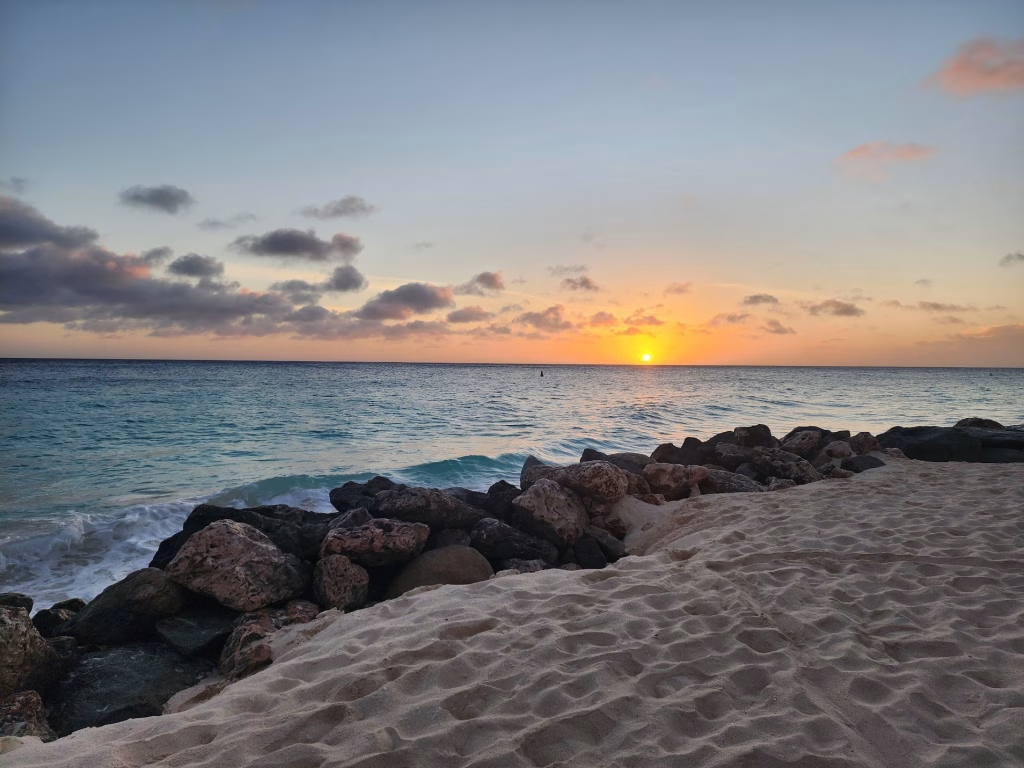
Short answer: Aruba has good weather every single month of the year. The real question isn’t weather — it’s crowds and price. Mid-December to mid-April is peak season: perfect conditions, highest prices, busiest beaches. Mid-April to early December delivers nearly identical weather for 30–40% less. And no, Aruba is not in the hurricane belt — the island sits far enough south that direct hits are extremely rare.
That’s unusual. Most Caribbean destinations force a genuine trade-off between weather and value. Aruba mostly doesn’t, and understanding why comes down to two things: latitude and wind.
Why Aruba’s Weather Barely Changes
Aruba sits roughly 12.5 degrees north of the equator, about 15 miles off the coast of Venezuela — far south of most of the Caribbean chain. Two consequences follow.
It’s a desert. Aruba receives around 18–20 inches of rain a year, which is less than Phoenix. The landscape tells you this before the statistics do: cactus, divi divi trees, scrubland. There is no monsoon here, and no month where it rains all day.
The trade winds never stop. Steady easterly trade winds blow across the island year-round, which is why 88°F in Aruba feels dramatically more comfortable than 88°F in Florida. It’s also why the divi divi trees all lean southwest — they’ve been shaped by decades of consistent wind.
Average daytime highs sit around 87–90°F all year. Overnight lows run 76–79°F. Sea temperature stays between roughly 79°F and 84°F. The variation between the “hottest” and “coolest” months is about three degrees, which is to say: nothing.
Aruba Weather Month by Month
| Month | Weather | Crowds | Price | Notes |
|---|---|---|---|---|
| January | Dry, breezy, warm | Very high | Peak | Carnival season begins |
| February | Driest, ideal | Highest | Peak | Carnival climax; book far ahead |
| March | Dry, strong wind | Very high | Peak | Spring break; excellent windsurfing |
| April | Dry, windy | High then dropping | Peak → shoulder | Prices fall sharply after mid-month |
| May | Dry, hot, windy | Low | Value | Best overall value month |
| June | Hot, windiest | Low | Value | Peak wind for kitesurfers |
| July | Hot, breezy | Moderate | Mid | Summer family travel picks up |
| August | Hottest, calmer wind | Moderate | Mid | Warmest sea temperatures |
| September | Hot, humid, calmest | Lowest | Lowest | Quietest month on the island |
| October | Warm, first real rain | Low | Low | Brief afternoon showers begin |
| November | Warm, wettest month | Rising | Rising | Short heavy showers, then sun |
| December | Warm, showers easing | Low → very high | Low → peak | Prices jump around 15 December |
December to April — Peak Season
This is the classic window and it earns the reputation. Rainfall is at its lowest, humidity is comfortable, the trade winds are strong and cooling, and the island is at its liveliest.
It’s also when everyone else comes. Expect palapas claimed by 7am on Palm Beach, restaurants requiring reservations, rental cars selling out, and room rates at their annual maximum. February and the two weeks around Christmas and New Year are the most expensive periods of the year — often double the low-season rate.
If you’re travelling in this window, book flights 3–4 months out and accommodation earlier still. Our complete vacation cost breakdown shows what those rates look like in practice.
Carnival runs from early January through to the days before Ash Wednesday, building to the Grand Parade — one of the biggest cultural events in the Dutch Caribbean. If you want to experience it, that’s a reason to accept peak pricing. If you want a quiet beach, it isn’t.
May to August — The Value Window
Here’s the case for going in summer: the weather is essentially the same, and you’ll pay meaningfully less.
May is arguably the single best value month on the calendar. The dry season is still running, crowds have collapsed after Easter, and rates have dropped but summer family travel hasn’t started yet.
June brings the strongest winds of the year — excellent if you windsurf or kitesurf, less ideal if you want a flat sea for snorkelling. July and August are the hottest months, with slightly calmer wind and the warmest water of the year.
The honest downsides: it’s genuinely hot in August, some restaurants take annual closures in the low season, and school-holiday travel in July and August pushes family-oriented resorts back toward moderate occupancy.
September to November — Quiet and Cheap
September is the quietest month in Aruba. Fewest visitors, lowest rates, easiest restaurant reservations. If your priority is a calm, uncrowded island at the lowest possible price, this is your month — and it’s also when the sea is at its calmest for snorkelling and diving.
October through December brings Aruba’s modest rainy season. “Rainy season” here means short, heavy afternoon showers that pass in 20 minutes, not days of grey. November is statistically the wettest month, and even then you’re looking at a few inches spread across the month. Sunshine remains abundant.
Prices start climbing again around the first week of December and jump sharply from roughly the 15th.
The Hurricane Belt Myth
This is the question that brings most people to this page, so let’s be precise about it.
Aruba lies south of the main Atlantic hurricane belt. The great majority of Atlantic hurricanes track west and northwest through the central and northern Caribbean, well above Aruba’s latitude. Aruba, Bonaire and Curaçao sit far enough south that direct hurricane strikes are rare events rather than annual risks — which is exactly why the island’s tourism industry runs at full capacity through September and October while other Caribbean destinations go quiet.
But “rare” is not “never,” and it’s worth being accurate about that. Aruba is not hurricane-proof. The island has experienced tropical storm conditions, and passing systems well to the north can still produce elevated surf, rain and wind. Being outside the belt lowers the odds substantially; it doesn’t reduce them to zero.
What this means practically:
- Travelling to Aruba in September or October is a sound decision, and statistically far lower-risk than most Caribbean alternatives in the same window.
- Buy travel insurance anyway. Not primarily because of Aruba’s weather, but because your connecting airport — Miami, Charlotte, Fort Lauderdale, San Juan — is genuinely in the belt. Storm disruption to your trip is far more likely to originate in Florida than in Aruba.
- Watch the forecast in the week before you fly the way you would for any trip.
The upshot: hurricane season is a reason to book flexible flights and buy insurance. It is not a reason to avoid Aruba.
Wind: The Factor Nobody Warns You About
Aruba’s trade winds are the island’s most underrated variable, and they surprise first-time visitors more than anything else.
The wind is a feature. It’s why the heat is bearable, why mosquitoes are barely an issue, and why Aruba is one of the best windsurfing and kitesurfing destinations in the world.
It is also relentless. Wind is strongest between roughly January and July, peaking around May and June. That means:
- Hats blow off. Sun umbrellas become projectiles. Anything light on your beach towel will end up two properties down.
- The east and north coasts are genuinely rough. Boca Grandi and the windward shore are for looking at, not swimming.
- Sand blows on the more exposed beach sections in the windiest months.
- Sunburn sneaks up on you. The breeze masks the heat, and people who’d normally notice they’re burning don’t. This is the most common way visitors ruin day two of their trip.
If you want the calmest water for snorkelling and photography, aim for September through November, when the trades ease off noticeably.
Best Month for Each Kind of Traveller
Best overall balance: May. Dry, warm, uncrowded, well-priced.
Lowest prices: September. Also the quietest.
Best weather with no compromises: February — if you’re willing to pay peak rates and share the beach.
Best for windsurfing and kitesurfing: May and June, when the trades are at their strongest.
Best for snorkelling and diving: September and October, when the water is calmest and clearest.
Best for culture: January and February for Carnival; late spring for the island’s festival season.
Best for families on a budget: Early June, after school ends but before summer rates fully kick in.
Best for a quiet romantic trip: Late September into early October — and stay on the Eagle Beach side of the strip rather than Palm Beach.
What to Pack, Whatever Month You Choose
- Reef-safe sunscreen, high SPF, more than you think. The wind hides the burn.
- A hat with a chin strap. Ordinary hats do not survive Aruba.
- A light layer for evenings. Restaurant air conditioning is aggressive, and breezy evenings on the water can feel cool.
- A light rain layer if travelling October through December. You’ll use it for 20 minutes at a time.
- Water shoes if you plan to explore the rocky north coast or Malmok.
- Reusable water bottle. Aruba’s tap water is desalinated, safe and good — buying bottled water here is an unnecessary expense and an unnecessary amount of plastic.
Frequently Asked Questions
What is the best month to visit Aruba? For the best balance of weather, crowds and price, May. For flawless dry-season weather regardless of cost, February. For the lowest prices and quietest beaches, September.
Does Aruba get hurricanes? Very rarely. Aruba sits south of the main Atlantic hurricane belt, and direct strikes are unusual. The island is not immune — passing systems can bring rain, wind and surf — but the statistical risk is far lower than in most of the Caribbean.
What is the rainy season in Aruba? Roughly October through December, with November typically the wettest. Even then, rain generally comes as brief afternoon showers, and total annual rainfall is only around 18–20 inches.
When is the cheapest time to visit Aruba? September, followed by early October and late April to early June. Rates in these periods commonly run 30–40% below peak season.
Is it too windy in Aruba? The trade winds are constant and strongest from January through June. Most visitors find them pleasant, but they’ll take your hat, complicate beach umbrellas, and hide how much sun you’re getting. September to November is the calmest stretch.
How hot does Aruba get? Daytime highs stay around 87–90°F year-round, with August typically the warmest month. The consistent breeze makes it feel considerably cooler than the same temperature elsewhere.
Is September a bad time to visit Aruba? No — it’s the quietest and cheapest month, with the calmest seas. The main consideration is that some restaurants close for annual maintenance, and your connecting airport may face hurricane-season disruption even though Aruba likely won’t.
The Bottom Line
Aruba is one of the few Caribbean destinations where you can book almost any week of the year and expect good weather. That makes the decision refreshingly simple: pick your month based on your budget and your tolerance for crowds, not on the forecast.
If money is no object and you want the island at its liveliest, come in February. If you want the same beaches for a third less, come in May or September and enjoy the space.
Whenever you land, plan your ground transport before you arrive, decide which beach suits your trip, and make sure your ED Card is submitted within the 7-day window.
Share this content: