
Short answer: five days is exactly enough time to see Aruba properly without rushing. Give one day to the beaches near your hotel, one to the north coast, one to Arikok and the wild east, one to the water, and one to Oranjestad and the south. Rent a car for at least days two and three — the best of Aruba isn’t on the hotel strip.
Most Aruba itineraries you’ll find online are either a list of 40 attractions with no structure, or a schedule so tight you’d need a helicopter. This one is built around how the island actually works: short driving distances, brutal midday sun, and a west coast that’s for swimming while the east coast is for looking at.
Everything below assumes you’re based on or near Palm Beach or Eagle Beach. If you haven’t booked yet, start with our comparison of Palm Beach vs Eagle Beach.
Before You Start: Three Things That Shape This Plan
Aruba is small. Nineteen miles long, six miles wide. The longest drive you’ll make is about 45 minutes, corner to corner. Nothing is far, which is why five days genuinely suffices.
The sun is the constraint, not distance. Between 11am and 3pm, outdoor activity in the desert interior is punishing. Every day below front-loads the hard stuff and puts you in the water or in the shade at midday.
A car for two or three days transforms the trip. You don’t need one for five days. Rent for days two and three, use buses and taxis otherwise. Our Aruba Transportation Costs Calculator will price your specific combination, and the full transportation guide explains the options.
Day 1 — Arrive, Slow Down, Watch the Sunset
Don’t plan anything ambitious on arrival day. You’ll have flown, cleared immigration, collected bags and found your room. That’s enough.
Afternoon. Walk your home beach end to end. If you’re at Eagle Beach, find the two divi divi trees. If you’re at Palm Beach, walk north toward the quieter end past the last high-rise. Get in the water. Register with your hotel’s watersports desk if you plan to use it.
Late afternoon. Buy supplies. A supermarket run on day one saves a surprising amount over five days — water, breakfast items, snacks, sunscreen and beer all cost a fraction of resort prices. Our guide to finding fresh produce in Aruba points you at the right places.
Sunset. Aruba’s west-facing coast delivers sunset every single evening, and the good ones are genuinely spectacular. Be on the sand by 6pm with a drink.
Dinner. Keep it close and easy. If you want to start the trip with something properly local rather than a resort restaurant, our list of authentic Crioyo restaurants is the place to look.
Skip: any tour booked for arrival day. You’ll resent it.
Day 2 — The North Coast and the Wild Side
This is your rental car day one. Pick up in the morning; most companies will deliver to your hotel.
8:30am — California Lighthouse. Twenty minutes north of Palm Beach at the island’s northwestern tip. Go early: the light is good, the crowds haven’t arrived, and it’s not yet unbearably hot. The views take in both the calm west coast and the churning north shore in a single sweep.
9:30am — Alto Vista Chapel. A small, bright yellow chapel on a hill, on the site where Christianity first arrived on the island in the 18th century. It takes fifteen minutes and it’s one of the most peaceful spots in Aruba. Our guide to Aruba’s sacred and spiritual sites covers the history properly.
10:15am — Bushiribana Gold Mill Ruins. The stone shell of a 19th-century gold smelter on the wild north coast, with waves detonating against the rocks below. The dirt road in is rough but manageable in a standard car if you go slowly. Genuinely dramatic, and free.
11:00am — Natural Bridge area. The original Natural Bridge collapsed in 2005; what remains is the smaller Baby Natural Bridge alongside the ruins of the original. It’s still worth the stop for the coastline, but manage expectations — a lot of visitors arrive expecting the postcard and are disappointed nobody told them.
12:00pm — Casibari or Ayo Rock Formations. Enormous tumbled boulders in the island’s interior, with short scrambling paths and views across to both coasts. Pick one, not both. Casibari has better-developed paths; Ayo has the ancient rock drawings.
1:00pm — Lunch and cool down. Head back toward the west coast.
3:00pm — Arashi Beach. The northernmost swimmable beach, past Malmok. Calm, sandy, with reef close to shore and a laid-back beach bar. Considerably quieter than Palm Beach and one of the better places on the island to snorkel straight off the sand.
Evening. You’ve earned a proper dinner. This is a good night for a reservation somewhere.
Optional swap: if you’re travelling with kids, substitute the Butterfly Farm, the Donkey Sanctuary or the Ostrich Farm for one of the rock formations.
Day 3 — Arikok National Park and the Deep South
The biggest day of the trip. Start early and bring more water than seems reasonable.
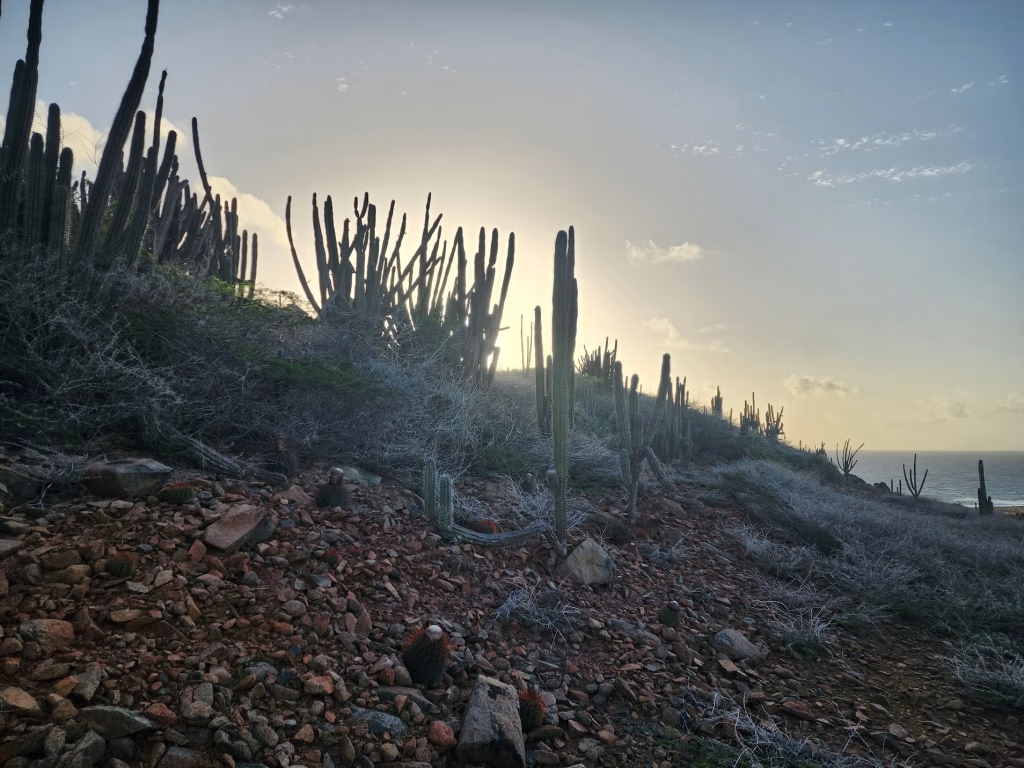
8:00am — Arikok National Park. Nearly 20% of Aruba is protected inside this park: desert landscape, caves with pre-colonial rock drawings, dramatic windward coastline, and the endangered shoco (burrowing owl), Aruba’s national bird.
Practical points that matter:
- Admission is charged per adult; under-18s enter free. Check the current rate on the official park site before you go — it was increased recently and the older figure is still circulating online.
- The visitor centre at San Fuego is the main entrance. There’s a second entrance at Vader Piet in the south.
- A standard rental car is fine for the paved main road and the caves. It is not fine for the Natural Pool (Conchi). That road requires a genuine 4×4, and rental agreements generally prohibit taking a regular car on it.
- To reach the Natural Pool, either rent a 4×4 for the day or book a guided jeep or UTV tour. There is no other legitimate way.
- There is no lighting in the park. Be out before dark.
Budget three to four hours. See the visitor centre, the caves (Fontein and Quadirikiri), and at least one stretch of the wild east coast.

12:30pm — Exit south toward Baby Beach. If you entered at San Fuego, exiting via Vader Piet drops you neatly toward the island’s southern tip.
1:00pm — Baby Beach. A shallow, sheltered lagoon at the far southern end of the island — waist-deep for a long way out, almost no waves, and the best beach in Aruba for small children or nervous swimmers. There’s a beach bar and lounger rental. After a morning in the desert, it’s exactly right.
3:30pm — San Nicolas street art. Aruba’s second city has been transformed by a large-scale mural programme, and the walls are now genuinely worth an hour of wandering. It’s a different Aruba from the hotel strip — more Caribbean, less resort — and it’s the part of this itinerary that first-time visitors most often say they didn’t expect to love.
Evening. Drive back (about 40 minutes) and eat somewhere unambitious. You’ll be tired.
Motorsport note: if your visit coincides with an event at the island’s drag strip, it’s a genuinely local night out — see our piece on Aruba’s racing culture.
Day 4 — On and Under the Water
Return the rental car this morning if you rented for two days. Today doesn’t need one.
Morning — Snorkel or dive the Antilla. The Antilla is a 400-foot German freighter scuttled in 1940, sitting in shallow water off Malmok. It’s one of the largest and most accessible wrecks in the Caribbean, shallow enough that snorkellers can see a great deal of it from the surface — which is unusual and is the main reason Aruba’s snorkelling punches above its weight.
Most half-day catamaran trips combine the Antilla with Boca Catalina and Malmok Reef, include gear, drinks and often lunch, and run roughly three to four hours. Book the morning departure: the water is calmer and the boats are less crowded.
Alternative if you’d rather stay on land: snorkel directly off Boca Catalina or Malmok, which are both accessible from shore. Bring your own mask — buying one locally for $20–$40 pays for itself over five days.
Afternoon — Recover. This is the right slot in the week for a spa treatment; we’ve rounded up the best places to get a massage in Aruba. Or do nothing on a lounger, which is also a legitimate use of a Caribbean afternoon.
Sunset — Consider a sunset sail. Two hours, open bar, the coastline from the water as the light goes. It’s touristy and it’s also genuinely lovely. Book a day or two ahead in high season.
Dinner. If you’ve been eating Caribbean all week, Aruba’s international scene is better than its size suggests — our guide to the island’s best sushi is a good place to start.
Day 5 — Oranjestad, Flamingos and the Long Goodbye
Morning — Oranjestad. The capital is compact and walkable. Dutch colonial architecture in improbable colours, Fort Zoutman and the Historical Museum, the National Archaeological Museum, and the free downtown streetcar that loops between the cruise terminal and the main shopping street.
Aruba is duty-free, so this is the morning for anything you’re bringing home — aloe products, local hot sauce, Dutch cheese.
Midday — Flamingos, if you can. The flamingos everyone photographs live on a private island belonging to a downtown resort. Access is generally reserved for guests of that property, with limited day passes sometimes available and often sold out well in advance. Arrange this before your trip, not on the day — and if it doesn’t work out, it isn’t worth reorganising your itinerary around a bird.
Afternoon — Your favourite beach, one more time. By day five you’ll know which stretch of sand you liked best. Go back to it.
Something sweet before you go. Aruban bakeries are one of the island’s quiet pleasures — see our guide to the best authentic desserts in Aruba.
Departure timing — read this carefully. If you’re flying to the United States, Queen Beatrix has US Customs pre-clearance on site, meaning you clear US immigration before boarding and arrive home as a domestic passenger. It’s a genuine luxury and it takes real time. Arrive at least three hours before a US-bound flight, and closer to four in high season.
If You Have More or Less Time
Three days: Do Day 1, Day 3 (Arikok and the south) and Day 4 (water). Skip the north coast.
Seven days: Add a full day of doing nothing, plus a day for the things this itinerary cuts — a windsurfing lesson at Fisherman’s Huts, the Aloe factory and museum, Philip’s Animal Garden, Mangel Halto for kayaking through mangroves, or one of the island’s quieter hidden beaches.
Ten days or more: You now have time for the far south properly — Rodgers Beach, Boca Grandi, and San Nicolas at a slower pace — plus a serious diving itinerary.
What to Skip
Being direct about this saves you money and a wasted afternoon:
- The original Natural Bridge. It collapsed twenty years ago. See the ruins if you’re passing, don’t drive out specially.
- ATV convoy tours through the interior, if you have any choice. They’re loud, dusty, hard on a fragile desert landscape, and you’ll see the same sites more pleasantly in a jeep.
- Booking every day. The most common first-timer mistake in Aruba is over-scheduling. Leave two afternoons genuinely empty.
- Full-week car rental, unless you’re staying somewhere remote. Two or three days covers everything in this plan.
What This Itinerary Costs
Rough per-person estimates for two people sharing, excluding flights and accommodation:
- Rental car, 2 days including insurance and fuel: $110–$160 total
- Arikok admission: check current rate; children free
- Catamaran snorkel trip: $55–$90 per person
- Sunset sail: $80–$120 per person
- Food and drink, 5 days, mixed self-catering and restaurants: $250–$500 per person
- Taxis and buses on non-car days: $40–$90 total
Full breakdowns for every category are in our complete Aruba vacation cost guide.
Frequently Asked Questions
Is 5 days enough for Aruba? Yes. Aruba is 19 miles long and you can cross it in under an hour. Five days lets you see the north coast, Arikok, the south and the reefs without rushing, with time left for the beach.
Do I need a rental car in Aruba? Not for the whole trip. Two or three days is enough to cover everything in this itinerary. Buses and taxis handle the rest, though there’s no Uber or Lyft on the island.
Can I drive to the Natural Pool in a regular car? No. The road to Conchi requires a genuine 4×4, and standard rental agreements prohibit it. Rent a 4×4 for the day or book a guided jeep or UTV tour.
What’s the best day trip in Aruba? Arikok National Park combined with Baby Beach and San Nicolas — desert, caves, wild coastline, the island’s calmest swimming beach and its best street art, all in one loop.
How long before my flight should I arrive at Aruba’s airport? Three hours minimum for US-bound flights because of on-site US pre-clearance, and closer to four in high season. Two hours is enough for other destinations.
When is the best time to do this itinerary? Any month works — Aruba’s weather barely changes. See our month-by-month breakdown for how crowds and prices shift through the year.
The Bottom Line
Aruba rewards a plan, but only a loose one. The island is small enough that you can improvise, and hot enough that you’ll want to.
Rent the car for two days. Get to Arikok early. Snorkel the Antilla. Go to San Nicolas even though nobody told you to. And leave at least two afternoons with absolutely nothing in them — those tend to be the ones people remember.
Share this content: