
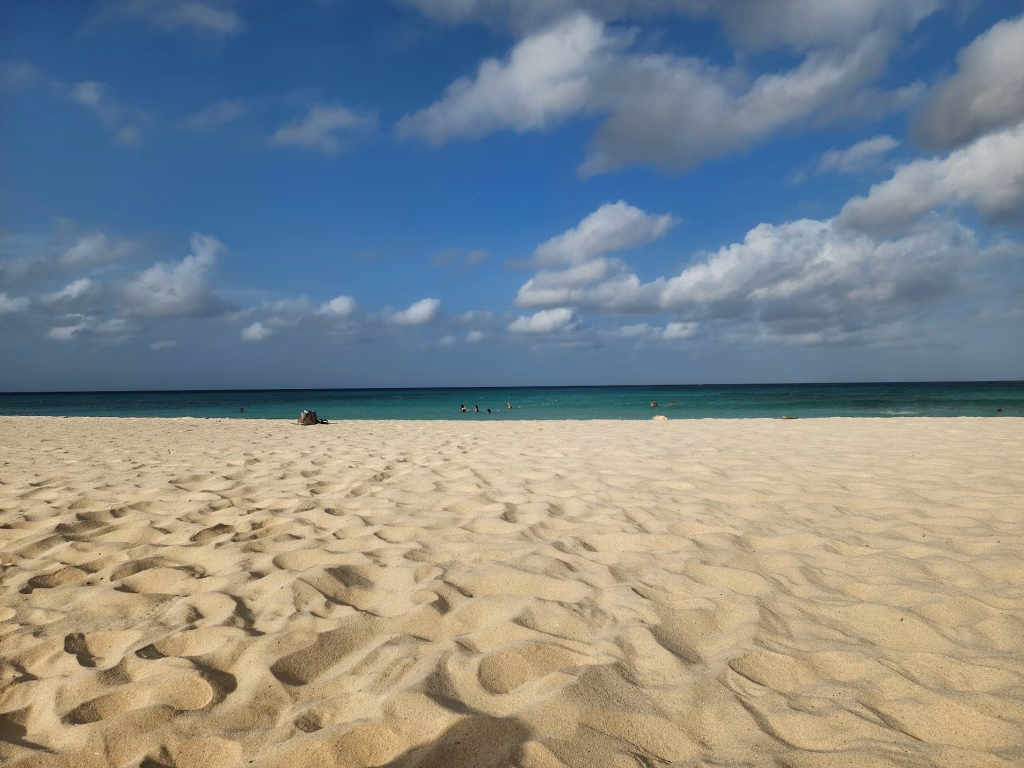
Short answer: choose Palm Beach if you want restaurants, nightlife, watersports and a big-resort atmosphere within walking distance of everything. Choose Eagle Beach if you want space, quiet, wider sand and a low-rise, low-key vibe — and you don’t mind driving or bussing to dinner. The two beaches sit less than two miles apart on the same stretch of Aruba’s calm west coast, but they deliver genuinely different vacations. Getting this one decision right matters more than almost anything else you’ll book.
This guide breaks down both areas honestly — including the parts the resort brochures leave out — and then covers Noord, Malmok, Oranjestad and the far south, so you can match the area to the trip you actually want.
The 30-Second Version
| Palm Beach | Eagle Beach | |
|---|---|---|
| Hotel style | High-rise (8–18 floors) | Low-rise (2–4 floors) |
| Atmosphere | Busy, energetic, resort-town | Spacious, relaxed, residential |
| Beach width | Narrower, densely packed with palapas | Very wide, easily the roomier of the two |
| Walkability | Excellent — dozens of restaurants on foot | Limited — a handful of options on foot |
| Nightlife | Bars, casinos, live music, late hours | Quiet after 10pm |
| Watersports | Constant — jet skis, parasailing, tubing | Minimal, calmer water |
| Best for | First-timers, groups, families with teens | Couples, repeat visitors, readers, early sleepers |
| Typical nightly rate | $200–$400 mid-range | $180–$300 mid-range |
Both beaches are free and public. In Aruba, no hotel owns the sand — a legal point worth remembering, because it means you can walk, swim and sunbathe anywhere on either beach regardless of where you sleep.
Palm Beach: The Convenience Play
Palm Beach is Aruba’s tourism engine. Roughly two miles of high-rise hotels sit shoulder to shoulder, with a strip of restaurants, bars, shopping plazas and casinos running directly behind them along J.E. Irausquin Boulevard.
What you’re actually buying
You never need a car. This is the single strongest argument for Palm Beach, and it’s a real one. Sixty-plus restaurants, three shopping complexes, several casinos and every watersports operator on the island are within a 15-minute walk. If you’d rather not budget for a rental car, Palm Beach effectively pays for itself. Our Aruba Transportation Costs Calculator will show you what that saving looks like against your specific trip.
Activity is constant. Beach vendors, catamarans loading at the pier, parasails overhead, music from the beach bars by mid-afternoon. Some people find this energising. Some people find it exhausting. Be honest with yourself about which one you are.
The infrastructure is excellent. Multiple pools, kids’ clubs, on-site dive shops, 24-hour front desks, reliable Wi-Fi, room service at midnight. Families travelling with teenagers almost always do better here — there’s simply more for a bored 15-year-old to do.
What nobody mentions in the brochure
The chair war is real. On Palm Beach, hotel palapas are typically claimed by 7:00am during high season. Some properties have introduced reservation systems; many haven’t. If you like a shaded front-row spot, you’re either setting an alarm or paying for a premium cabana.
The beach is narrower than the photos suggest. Wide-angle marketing shots do a lot of work here. Palm Beach’s sand strip is genuinely lovely, but at peak season it is densely packed, and the walk from the back row to the water passes several rows of loungers.
Noise carries. High-rises reflect sound. Beach bars run live music until 10 or 11pm, and rooms on the lower floors facing the pool deck hear all of it. If you’re a light sleeper, request a high floor away from the pool.
Rooms cost more for the same square footage. You’re paying a premium for the location and the amenity stack, not for the room itself.
Who should book Palm Beach
First-time visitors who want to see what the fuss is about. Groups where nobody wants to be the designated driver. Families with teens. Anyone travelling without a rental car. People who genuinely enjoy a lively resort atmosphere and would find a quiet beach boring by day three.
Eagle Beach: The Space Play
Eagle Beach sits just south of Palm Beach and is consistently ranked among the best beaches in the world — a ranking that has far more to do with the sand than the hotels. Building height here is restricted, so the properties are low-rise, set further back, and separated by open space rather than packed together.
What you’re actually buying
Room to breathe. Eagle Beach is dramatically wider than Palm Beach. Even in February you can find genuine space between groups. This is the number-one reason repeat visitors migrate south after their first trip.
Calm. The water is typically flatter, there’s far less motorised watersports traffic, and the atmosphere after sunset is closer to a residential neighbourhood than a resort strip. Couples and light sleepers do notably better here.
The divi divi trees. The two wind-bent divi divi trees on Eagle Beach are the island’s most photographed landmark, and yes, they’re worth the walk at golden hour.
Better value per dollar in many cases. Comparable room quality often runs 15–25% less than the Palm Beach equivalent, because you’re not paying for the casino and the shopping plaza downstairs.
What nobody mentions in the brochure
You will want a car, or you’ll spend real money on taxis. There are good restaurants nearby, but nothing like the density of Palm Beach. Two dinners out per couple, per week, taken by taxi, will erase the room-rate saving quickly. Read our Complete Guide to Transportation in Aruba before you decide.
It’s quiet in a way that surprises some people. By 10pm, Eagle Beach is asleep. If your idea of a Caribbean holiday includes a late bar, you’ll be driving 10 minutes north every night.
Some “Eagle Beach” hotels are across the road. Several properties marketed as Eagle Beach are on the inland side of J.E. Irausquin Boulevard. That’s a road crossing between you and the sand — fine for most people, worth knowing before you book, and a legitimate reason those rooms are cheaper.
Fewer on-site dining options. Low-rise properties tend to have one or two restaurants rather than six.
Who should book Eagle Beach
Couples and honeymooners. Repeat visitors. Families with young children who nap. Anyone who reads on the beach. Travellers renting a car anyway. People whose main complaint about their last beach holiday was the crowds.
The Other Four Areas Worth Considering
Most “where to stay in Aruba” articles stop at two beaches. That’s a mistake — these four options solve problems the big two don’t.
Noord
The residential district behind and around the hotel strip. This is where the condo and villa rental market lives, and where most locals in the tourism industry actually live. You get significantly more space for your money, real supermarkets, and a genuinely local feel — plus a five-minute drive to either beach.
Trade-off: a car is essentially mandatory, and you’re not waking up to an ocean view. Best for: groups of 4+, families, longer stays, anyone self-catering. If you’re cooking, our guide to finding fresh produce in Aruba will save you a first-morning scramble.
Malmok
North of Palm Beach, past the last high-rise. Rocky shoreline rather than sand, but the snorkelling straight off the rocks is the best on the leeward coast, and it’s the departure point for most catamaran trips to the Antilla wreck.
Trade-off: no swimmable beach on your doorstep, very few restaurants. Best for: snorkellers, divers, people who want quiet and don’t need sand.
Oranjestad
The capital. Cruise terminal, colonial architecture, the free downtown streetcar, duty-free shopping, and a small but growing hotel scene.
Trade-off: the city beaches are not the reason you came to Aruba. Best for: short stays, business travel, culture-first travellers, and anyone flying in late or out early — it’s the closest hotel cluster to the airport.
San Nicolas and the far south
Aruba’s second city, now known for large-scale street art, a distinct Caribbean-Creole character, and proximity to Baby Beach — a shallow, calm lagoon that is the best beach on the island for small children.
Trade-off: roughly 40 minutes from the hotel strip, minimal nightlife, limited accommodation. Best for: repeat visitors who’ve done the strip, families with toddlers, travellers seeking the least touristy version of Aruba.
How to Choose in Three Questions
1. Are you renting a car? No → Palm Beach or Oranjestad. Yes → everywhere opens up, and Eagle Beach or Noord probably wins on value.
2. What time do you want to go to sleep? Before 10pm → Eagle Beach, Noord, Malmok. After midnight → Palm Beach.
3. Who’s in your party? Couple → Eagle Beach. Teens → Palm Beach. Toddlers → Eagle Beach or the far south near Baby Beach. Group of six adults → Noord condo.
If two of the three answers point the same direction, book there and stop second-guessing.
What It Costs
Rough mid-range nightly rates, high season (mid-December to mid-April), double occupancy:
- Palm Beach high-rise: $220–$400
- Eagle Beach low-rise: $180–$300
- Noord condo/villa (4–6 people): $200–$350 total, not per person
- Oranjestad hotel: $130–$250
- San Nicolas / far south: $120–$220
Low season (mid-April to mid-December) typically runs 30–40% below these figures. For a complete picture including flights, food and activities, see our full Aruba vacation cost breakdown.
Budget separately for resort fees ($15–$35 per night at many properties, often not shown in the headline booking price) and the $20 per-person Sustainability Fee paid before arrival.
A Note on Safety
Whichever area you choose, Aruba consistently ranks as one of the safest destinations in the Caribbean, and all of the areas above are comfortable to walk in after dark. Normal precautions apply — don’t leave valuables in a parked rental car, particularly at remote beaches and trailheads. We covered this in depth in Is Aruba Safe?
Frequently Asked Questions
Which is better, Palm Beach or Eagle Beach? Neither is objectively better — they solve different problems. Palm Beach wins on convenience, dining density and nightlife. Eagle Beach wins on space, calm and beach quality. If you’re not renting a car, Palm Beach is usually the safer choice.
Can I stay at Eagle Beach and still visit Palm Beach? Easily. They’re under two miles apart, roughly $10–$14 by taxi or a short ride on the Arubus line that runs along the coast road. Many Eagle Beach guests eat dinner on Palm Beach several nights a week.
Is Eagle Beach really less crowded? Yes, meaningfully so. It’s a wider beach with fewer hotel rooms behind it. The difference is most obvious between 10am and 3pm in high season.
Do I need a rental car if I stay at Eagle Beach? Not strictly, but you’ll want one for at least part of your trip. Budget for taxis or a two-to-three-day rental if you’d rather not have a car the whole week.
Which beach is better for young children? Eagle Beach for the space and the calmer water. For toddlers specifically, Baby Beach in the far south is the best on the island — shallow, sheltered and almost wave-free.
Are the beaches in Aruba private? No. All beaches in Aruba are public by law. Hotels control the loungers and palapas they’ve placed, but not the sand or the water access.
The Bottom Line
Most first-time visitors book Palm Beach, enjoy it, and then book Eagle Beach the second time. That’s not a criticism of either — it’s a fair description of how preferences evolve once you know the island.
If this is your first trip and you want everything within reach, book Palm Beach without agonising over it. If you’ve been before, if you’re travelling as a couple, or if the phrase “beach bar with live music until eleven” sounds like a problem rather than a feature, go south to Eagle Beach.
And whichever you choose, rent a car for at least two days. The best of Aruba — Arikok, the north coast, Baby Beach, San Nicolas — isn’t on either beach.
Planning the rest of your trip? Start with our complete vacation cost breakdown, then find your table at one of Aruba’s best authentic local restaurants.
Share this content: